Hiring House Cleaning Services in Lancaster County: What to Ask Before the First Visit
Before you hire house cleaning services in Lancaster PA, know the seven questions to ask. A professional process is what makes a clean home repeatable.
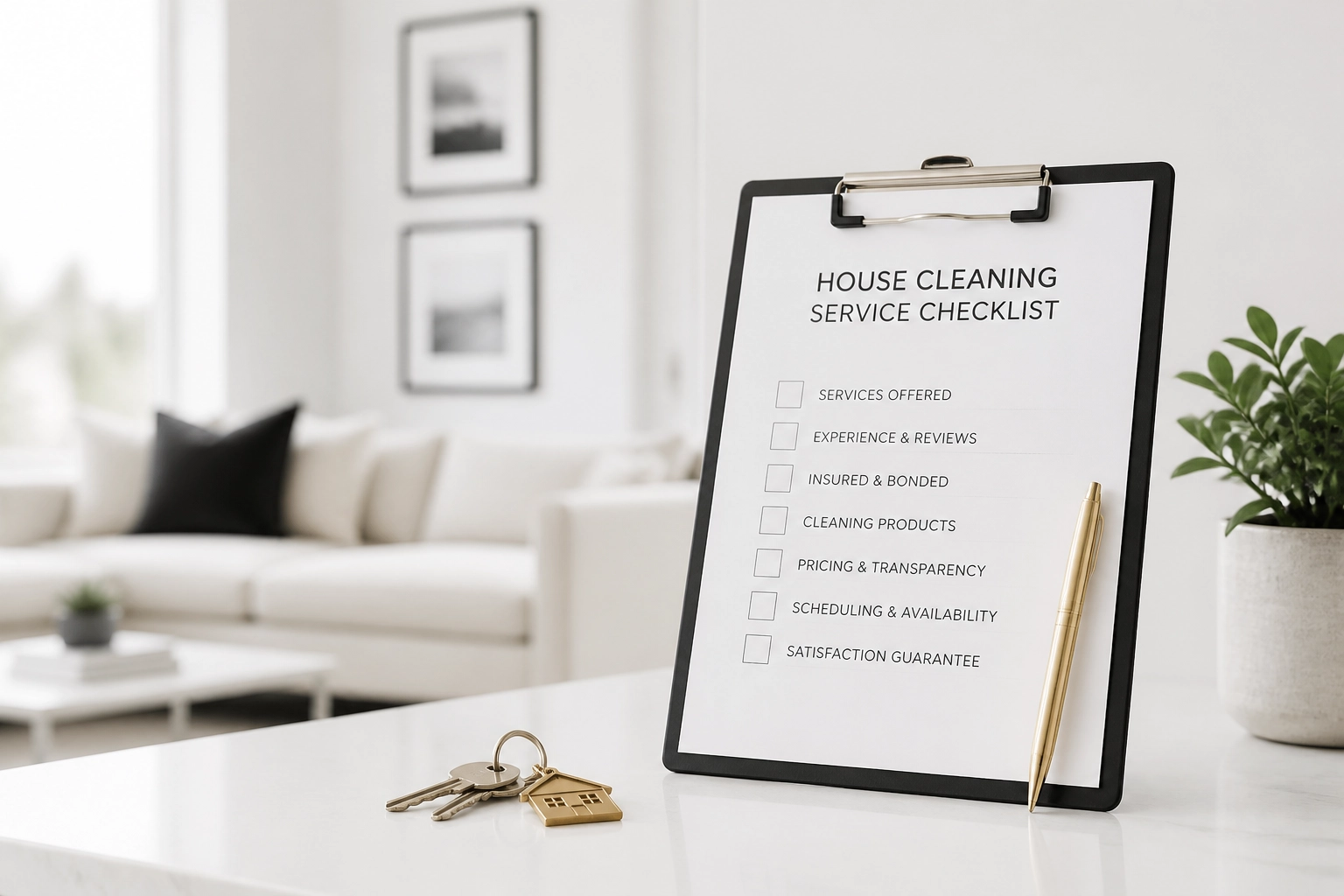
A clean home is a wonderful result, but it's the process behind it that makes that result repeatable. When you're looking for house cleaning services in Lancaster PA, the real difference between a professional team and informal help lies in the questions you ask before the first visit. A promise of a clean house is easy, but a defined process gives you confidence and consistency.
This guide will walk you through that process step-by-step. You will learn why a defined process matters more than a promise, and what a professional service will discuss with you. We will cover how to start with a walkthrough, get a written scope of work, and talk through product sensitivities. You will also learn what to ask about handling keys and lockboxes, who will actually show up on cleaning day, and how to verify insurance and bonding. Finally, we will review rescheduling policies and what a professional first day on the job should look like. At Haley's Cleaning Service, we believe a customized plan and dependable communication are key. By the end of this post, you will know exactly how to choose a service that delivers consistent, detail-focused results. Questions now mean consistency later.
Why a Defined Process Matters More Than a Promise
A clean house is the result you buy. A defined process is what makes that result repeatable next week and next month. In our experience, homeowners often start with price and a recommendation, then discover months later that no one defined what "clean" includes. If cost is your first question, see our companion residential pricing guide. This article stays out of pricing and covers process instead.
Two terms matter. A walkthrough is a short visit or call where the company sees or hears your layout before quoting. A written scope is the list of what is done every visit. These standards also apply to commercial and property-management work, where written scope, dependable scheduling, and documented quality checks matter just as much; see Documentation: What a Well-Specified Cleaning Program Actually Looks Like.
What follows are seven questions in the order they arise, each with what to ask and what a good answer sounds like: walkthrough, written scope, products and sensitivities, key handling, who shows up, insurance and bonding, and rescheduling.
Step 1: Start With a Walkthrough, In Person or by Phone
A quote given over the phone without a walkthrough is a guess, and guesses turn into scope gaps and disagreements after the first visit. Start here, before pricing enters the conversation.
Ask three things:
Format and cost. Is the walkthrough in person, by phone, or by video? How long does it take, and is there any charge or obligation attached to it?
What they need from you. Room count, square footage, number of bathrooms, pets, and any areas you want handled differently than the rest of the house.
How they price. Is the number per visit or a flat rate, and does the first clean cost more than recurring visits?
A good answer sounds like questions back: flooring types, pets, bathrooms, and which rooms get the most use. A company reading a rate card is not doing a walkthrough.
In our experience, a locally owned company can usually be more flexible on walkthrough timing than a call-center franchise. The same discipline applies to commercial spaces, so you can book your office walk-through and watch the process work the same way.
Once the layout is understood, the next question is what actually gets done.
Step 2: Ask for the Scope of Work in Writing
A walkthrough gives the company information. A written scope gives you a document you can hold onto, and the difference matters more than most homeowners expect. Ask for the scope as three clear lists: what is cleaned every visit, what is rotated or done periodically, and what is never touched without asking. Without that document, a verbal agreement made at the door can quietly shrink by the fifth visit while the first one still looks impressive.
Ask specifically how inside-oven, inside-fridge, inside-cabinet, blinds, baseboards, ceiling fans, and laundry are treated, and which of those are standard versus add-on. Ask how extras are requested and priced, including deep cleaning, move-in and move-out cleaning, and post-construction cleanup. Ask how quality is documented: is there a checklist, an end-of-visit walkthrough, or a window for reporting anything missed?
Property managers arranging turnovers should expect the same written scope for each unit, not a verbal understanding that shifts with every crew. What a professional apartment turnover clean actually includes depends on that consistency.
Step 3: Talk Through Products, Allergies, and Sensitivities
Once the scope is in writing, ask what actually goes into the cleaning. The document should also say what touches your home. Ask which products and equipment the company brings by default, including vacuums, mops, and cloths, or whether you supply any of them. This matters for allergies, asthma, fragrance sensitivity, infants, and pets, because a product that works in one home may be a problem in yours. Many cleaning products contain scents, chemicals, and volatile organic compounds that can trigger asthma, according to the Asthma and Allergy Foundation of America. Ask whether the company can use your products or a fragrance-free option, and whether either choice changes price or results. Ask how it treats hardwood, natural stone, and luxury vinyl plank, and whether one all-purpose product is used everywhere. If allergies are a concern, ask whether the vacuum is HEPA-filtered. Do not assume a green label means unscented or chemical-free; ask what is in the bottle. If you want to know how the people using those products are screened, see our guide to personnel screening and background check procedures.
Step 4: Settle How Keys, Codes, and Lockboxes Will Be Handled
Once products are settled, lock down access. Ask which entry methods the company works with: being home, a hidden key, a lockbox, a garage code, or a smart lock. Then ask who inside the company can see codes and keys, and how that access is recorded and stored. For a lockbox, confirm who sets and removes it. Clear answers here show the visit can actually happen.
Ask what happens if a crew arrives and cannot get in, and whether that visit is still billed. Ask how alarm systems and pets are handled, and whether you receive a notice when the visit starts or finishes.
If you would rather be home for the first visit, say so early and ask whether that fits the company's schedule. It is a reasonable request, and a local house cleaning service should work with it.
Step 5: Find Out Who Will Actually Show Up
Who enters your home matters as much as what gets cleaned. Ask whether the same team is sent for every visit or whether crews rotate. Rotation usually means re-explaining your preferences each time. Next, ask whether the person who walks your home is the person who cleans it, or whether a salesperson handles the walkthrough.
Ask how the company hires and screens the people who enter homes, and request specifics rather than accepting “we only hire good people.” Ask whether cleaners are employees or subcontractors, and how that changes who answers for a missed room or a damaged item. Property managers evaluating apartment turnover cleaning services should ask this per crew, not per company.
Finally, ask who your point of contact is for questions or complaints, and how quickly that person typically responds.
With the team question settled, the next step covers the coverage behind it: insurance and bonding.
Step 6: Verify Insurance and Bonding Before the First Visit
Once you know who will enter your home, confirm what protects you if something goes wrong. In our usage, a bond refers to coverage tied to employee fraud or dishonesty, and general liability insurance is the separate policy that addresses damage or injuries. Ask any house cleaning service: Does the company carry general liability insurance, and can it provide a certificate of insurance on request? How are injuries that happen in my home covered, and which policy applies? If something is damaged or goes missing, how soon should I report it, and what are the resolution steps? A verbal "we are insured" is not verification. Request the document, read the named insured, and confirm it matches the company you hired. For a fuller checklist, see Verify Licensing, Insurance, and Employee Standards Before Signing Anything. Expect specific answers about who handles a claim and who contacts you. Vague assurances are your cue to keep asking.
Step 7: Understand the Rescheduling and Communication Policy
Insurance and bonding settle who answers for problems. The schedule and communication policy settle how problems are avoided. Ask for the notice window in both directions: how much notice you must give to reschedule or cancel, and how much the company promises if it needs to move your visit. Ask what happens when a visit falls on a holiday or unsafe weather, whether it moves, skips, or changes price. Confirm billing if the company misses a visit rather than you; a written no-charge or make-up clean policy is the clear answer. Ask whether recurring service is weekly, biweekly, or monthly, and how to pause it for travel or a renovation without canceling. Ask whether reminders and confirmations arrive by text, email, phone, or portal, and who receives them, which matters when you don't have to be in the room. Finally, ask how service ends: required notice, any final visit, and final invoice timing.
What Day One Should Look Like
Once scheduling and communication terms are settled, day one should follow a predictable sequence. Ask the company to confirm these expectations before the first visit.
A confirmed arrival window, plus a call or text if the team will be early or late.
A brief walkthrough before work begins. On the first clean, point out priorities and any room that needs extra attention.
The written scope on site and in use, not recalled from memory. If a task is not listed, clarify before cleaning starts.
An end-of-visit check-in while the team is still there, so you can flag a missed area immediately.
A clear feedback route and correction process if a room was skipped.
We treat first visits as deeper by design, so ask whether your price reflects that.
A company that can walk you through this sequence is showing you how it will handle visit ten, not just visit one.
Questions Now, Consistency Later
Step back from the details for a moment. Those seven questions are not red tape. They are the difference between a clean home that happens once and a clean home that keeps happening. A spotless first visit is the outcome. A defined process is what makes that outcome repeatable instead of accidental.
If a company cannot answer these questions in plain language before the first visit, treat that as a signal about how the tenth visit will go. Talk to two or three local cleaning services in the same week, and use this list as a comparison sheet. You will be comparing answers, not impressions.
Haley's Cleaning Service welcomes the conversation. Reach out to request a quote or consultation.
Conclusion
A defined process is what turns a great first cleaning into a dependable routine. Keep these takeaways in mind as you decide: get the walkthrough and the scope of work in writing, settle product sensitivities and key handling before anyone arrives, confirm who will actually show up and that insurance and bonding are current, and understand the rescheduling and communication policy up front.
Your next step is simple. Request a quote or consultation from Haley's Cleaning Service and start with clarity.
Want it done right?
Residential and commercial cleaning across Lancaster County. Free quote.
Get a quote