Anatomy of a Commercial Cleaning SLA for Lancaster Businesses
Learn the five elements of a commercial cleaning SLA, from zone-based tasks to reporting, and get a skeleton Lancaster businesses can hand to any vendor.
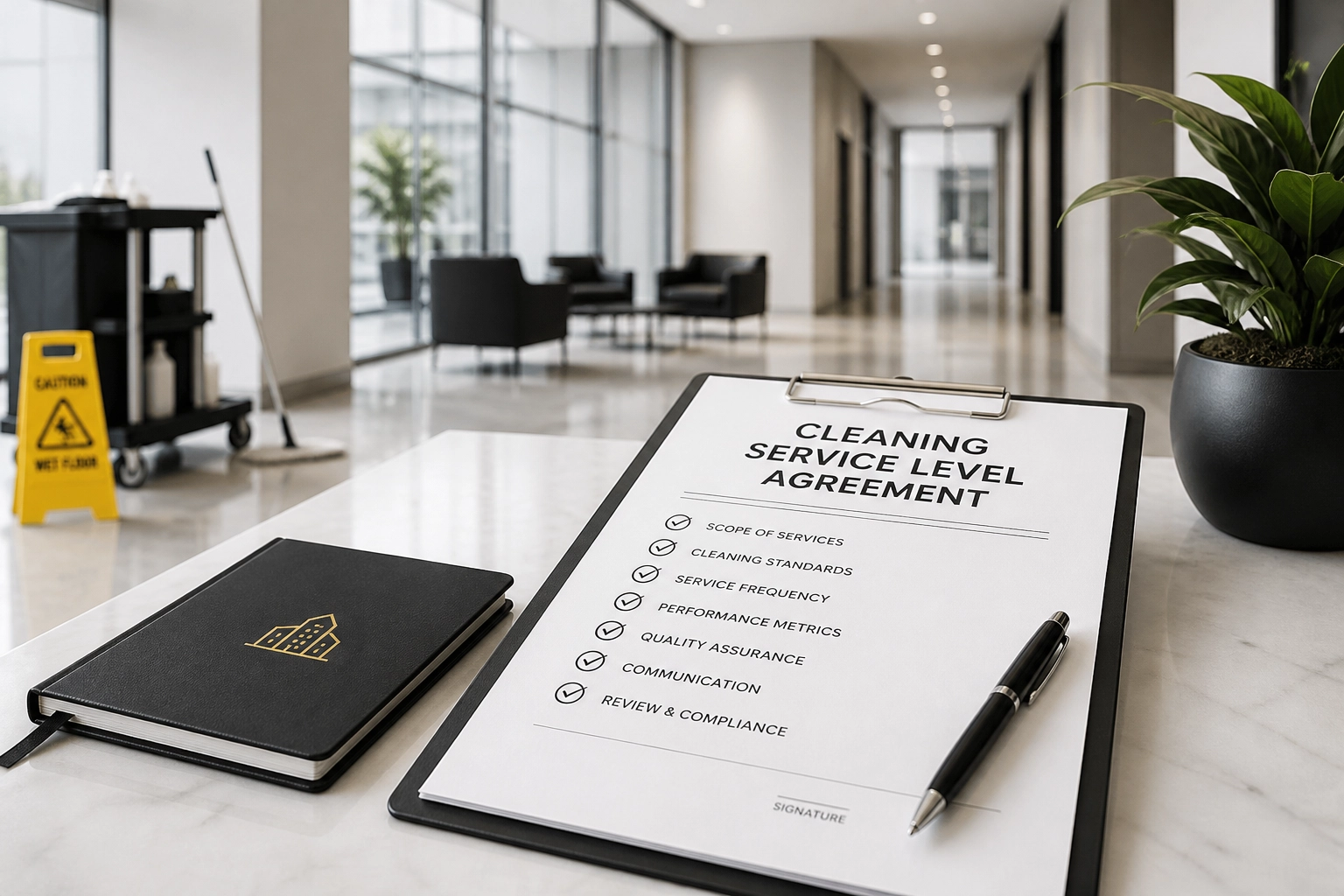
"Clean" is not a service level. It is an opinion, and a subjective one at that. When a facility manager in Lancaster County says a building needs to be "cleaner," and a vendor believes it is already clean, you have the ingredients for a frustrating relationship. Most vendor friction does not start with poor work; it starts with undocumented expectations. The solution is a commercial cleaning Service Level Agreement (SLA) that converts vague hopes into measurable, auditable commitments.
This tutorial will guide you through the anatomy of an effective SLA for janitorial services. You will learn how to transition from subjective impressions to objective standards. We will break down the essential components, including zone-based task definitions, visit frequency, inspection cadence, and reporting formats. We will provide a clear, copy-ready skeleton you can use to vet potential partners. By the end, you will have a document that holds any company accountable. At Haley's Cleaning Service, we champion this documented approach to ensure reliability and consistent quality for businesses across the region. Let's turn your standards into a written scope that works.
Why "Clean" Is an Opinion Until You Write It Down
A vendor says the office was cleaned. A tenant says it was not. Nothing in writing settles the disagreement, and everyone walks away with a different version of the same night. That gap is where vendor friction lives.
In our experience working with Lancaster County facilities, undocumented expectations cause more friction than effort, price, or staffing ever do. Verbal walkthroughs and handshake agreements fail because the room, the accepted standard, and the timing all leave with the people who spoke them. Two people can walk the same lobby and see two different results.
Commercial cleaning and janitorial services are judged on perception, which is exactly why the standard belongs on paper before the first visit, not after the first complaint. That is the job of a service level agreement: it turns "clean" into a checklist a supervisor can walk, score, and sign. For a closer look at how that standard should read, see Expect Documented Cleaning Standards, Not Verbal Promises.
What a Commercial Cleaning SLA Actually Is, and Why the Buyer Should Own It
For Lancaster County facilities, a commercial cleaning SLA is the operational schedule attached to your cleaning contract: what gets done, in which zones, how often, and to what accepted standard. The contract covers term, price, insurance, and liability. The SLA covers the work itself. Keep them separate and cross-reference them.
The buyer should draft or drive the SLA, because only you can define what is acceptable in your building. Vendors can advise, but they cannot set your tolerance for restroom residue, lobby appearance, or reporting detail. Pricing follows scope, so professional janitorial services providers can quote accurately only after zones, frequency, and reporting are on paper. Otherwise, every bid is a guess and every change becomes a negotiation.
Language should flex by facility type. Office janitorial services emphasize touchpoints and after-hours access; bank branch cleaning adds public-facing presentation; gym cleaning adds locker rooms and high-traffic equipment areas; church cleaning follows event calendars; post-construction cleaning follows trade schedules and dust control. Before comparing bids, review contract terms and pricing transparency alongside the draft SLA.
Component 1: Zone-Based Task Definitions
The first component is zone-based task definitions. List these zones separately for most Lancaster facilities: entry and lobby, restrooms, breakrooms, private offices, open workstations, conference rooms, stairwells, elevators, trash rooms, and exterior entry areas.
A strong line names the zone, task, frequency, and accepted standard. For example: Restrooms disinfected daily; fixtures free of visible residue; consumables restocked to a set par level. That gives a supervisor something to walk and score. The weak version, a single sentence promising general cleaning of the facility, gives a vendor nothing to audit and a buyer nothing to enforce.
Zones differ by property type. Apartment community common areas, fitness facility locker rooms, and school or church hallways each carry different traffic, hours, and touchpoint density, so a well-specified cleaning program should reflect them distinctly. Finally, list office-by-office exclusions, such as desks cleared of personal items, so your standard never quietly assumes work nobody agreed to.
Component 2: Visit Frequency and Per-Zone Scope
With your zones defined, attach a schedule to each one. Specify visits per week, days of service, and the service window, then define what "daily" means when the building closes for a holiday or weather event. Frequency should follow traffic, not habit: a bank lobby with daily foot traffic and a warehouse office may not share the same visit count. Keep recurring work separate from event-driven work so apartment turnover cleaning, move-in and move-out cleaning, and post-construction cleaning are scheduled and priced as their own line items rather than folded into weekly service. Add a written, buyer-defined on-call or touch-up allowance for spills, sick days, and heavy-weather entry messes. The common failure is a schedule that says "cleaned weekly" with no access rules, alarm codes, or locked-area procedure; that guarantees missed rooms. Before you quote, document access and confirm the visit pattern aligns with What a Recurring Commercial Cleaning Program Actually Looks Like.
Component 3: Inspection Cadence and Who Signs Off
Frequency and access set the schedule; inspection proves it was met. Write inspection cadence as buyer-filled fields: vendor self-inspection every [frequency], joint walkthrough every [interval], who inspects each, who co-signs the report, and who receives the results besides you. Name backups so the standard does not hinge on one busy manager.
For scoring, choose pass/fail per zone or a short point scale. Label it your selected method, not an industry standard. Keep the proof trail simple: dated photos and a completed walkthrough form. Findings should separate a cleaning defect from normal wear and tear, or the record loses credibility.
Those records feed Component 4. A dated pattern of failed restroom or lobby inspections lets you discuss recurrence, not argue about one bad night. The same detail-first mindset behind No shortcuts. No missed corners. belongs in every commercial inspection record you keep.
Component 4: Complaint Response Time and Escalation
Fields the Buyer Defines
Inspection findings only create accountability when the complaint path is equally specific. Your SLA should name the reporting channel (a dedicated email or phone line), the acknowledgment window, the on-site correction target, and an after-hours route for urgent problems like a restroom outage or a spill in a public lobby.
Sample Structure: Written as Buyer Choice
A practical starting point: acknowledgment within four business hours, with a resolution target you set by facility type. A bank lobby may warrant same-day correction; a low-traffic office suite may accept next-visit resolution. These are your fields to fill, not industry benchmarks.
The Escalation Ladder
Require named people with reachable contacts at each tier: on-site supervisor, then account manager, then owner. Written confirmation when a complaint closes turns recurring issues into a documented pattern.
Match the Path to the Portfolio
A single-site Lancaster office needs one supervisor contact. A property management company overseeing several apartment communities needs a portfolio-level path with per-property names. State which applies.
Component 5: Reporting Format and Documentation
Once complaints close in writing, reporting turns those records into a pattern. Define cadence and format now: a monthly summary, inspection results, a completion log by zone, and every missed visit with a reason. Ask for a consumables list with par levels and restocking notes so restroom and breakroom supplies do not become a monthly surprise. Require an incident report for damage, breakage, or anything unusual found on site, dated and signed by the person who reported it. For turnover work, mirror the documentation every property manager should require from a turnover cleaning vendor. At onboarding, commercial janitorial services providers should supply insurance and staffing documentation, and the SLA should list exactly what is expected. Keep the format simple and identical each period; that consistency is what makes a trend visible across six months of office cleaning in a busy Lancaster workplace. The next step is putting these fields into a copy-ready skeleton.
A Copy-Ready SLA Skeleton for Lancaster County Facilities
With reporting settled, put the whole standard on one page.
Facility: name and address Service days and window: ___ Access and alarm procedure: ___ On-site contacts: buyer ___ / vendor ___
Zone | Tasks | Frequency | Accepted standard |
|---|---|---|---|
___ | ___ | ___ | ___ |
Quality: inspection cadence ___; sign-off ___; scoring method ___; records stored ___.
Communication: complaint channel ___; acknowledgment target ___; resolution target ___; escalation names ___; reporting format and due date ___.
Customize fields for your facility type, including bank and financial institution cleaning standards.
This skeleton is a starting structure from Haley's guidance, not legal advice. Pricing, contract term, insurance, and liability belong in the agreement your attorney or counsel reviews.
Using the Skeleton to Vet Janitorial Services in Lancaster
With the skeleton drafted, send the identical document to every company you are considering and compare how each answers, not just what each quotes. A vendor who engages with your zones is usually the one who will work to them.
Watch for clarifying questions about access, traffic patterns, and priorities. That signals a provider planning to a standard rather than running a routine.
Request sample inspection sheets and reporting documents. You are checking whether the paperwork is real or described only in conversation.
Ask each to walk through a hypothetical: a missed visit, a new tenant turnover, or a 7 a.m. spill in the lobby. Compare those answers against the response windows in your draft.
As one local example, Haley's Cleaning Service builds customized cleaning plans for offices, banks, property managers, apartment communities, schools, churches, and gyms across Lancaster County and nearby communities, and expects the same written standard from itself that this article asks you to write. That is the standard to hold every bid to. Ready for a fresher space?
Next Steps: Turn Your Standards Into a Written Scope
You have the checklist. Now make it yours. Recap the five components you must define: zone-based task definitions, visit frequency, inspection cadence, complaint response time, and reporting format.
This week, at no cost, list every zone in your building. Mark the zones that generate the most complaints, and write one acceptable standard for each. That single page becomes your first enforceable scope.
Before requesting any quote, decide your inspection cadence and response windows. Those two choices prevent more friction than any discount.
Then hand the skeleton to each commercial cleaning and janitorial services vendor you are evaluating. Compare the completed versions side by side, zone by zone.
Ready to put a written standard behind your facility? Request a consultation or quote from Haley’s Cleaning Service for facilities in Lancaster, Landisville, East Petersburg, Mountville, Rohrerstown, Centerville, and surrounding Lancaster County communities.
Conclusion
A commercial cleaning SLA transforms "clean" from a matter of opinion into a documented, enforceable standard. By defining zone-based tasks, visit frequency, inspection cadence, complaint response windows, and reporting format, you give every vendor the same clear framework to work from and the same benchmark to be measured against.
The value is control. You decide what acceptable looks like, you document it, and you hold every bid to it. That written scope protects your facility, your tenants, and your budget long after the contract is signed.
Your next step is simple: complete the one-page exercise in this post, then use the skeleton to vet janitorial services in Lancaster. If you want a partner who expects the same written standard from itself, request a consultation or quote from Haley's Cleaning Service. Turn your standards into a scope, and give your facility the consistent, detailed care it deserves.
Want it done right?
Residential and commercial cleaning across Lancaster County. Free quote.
Get a quote